
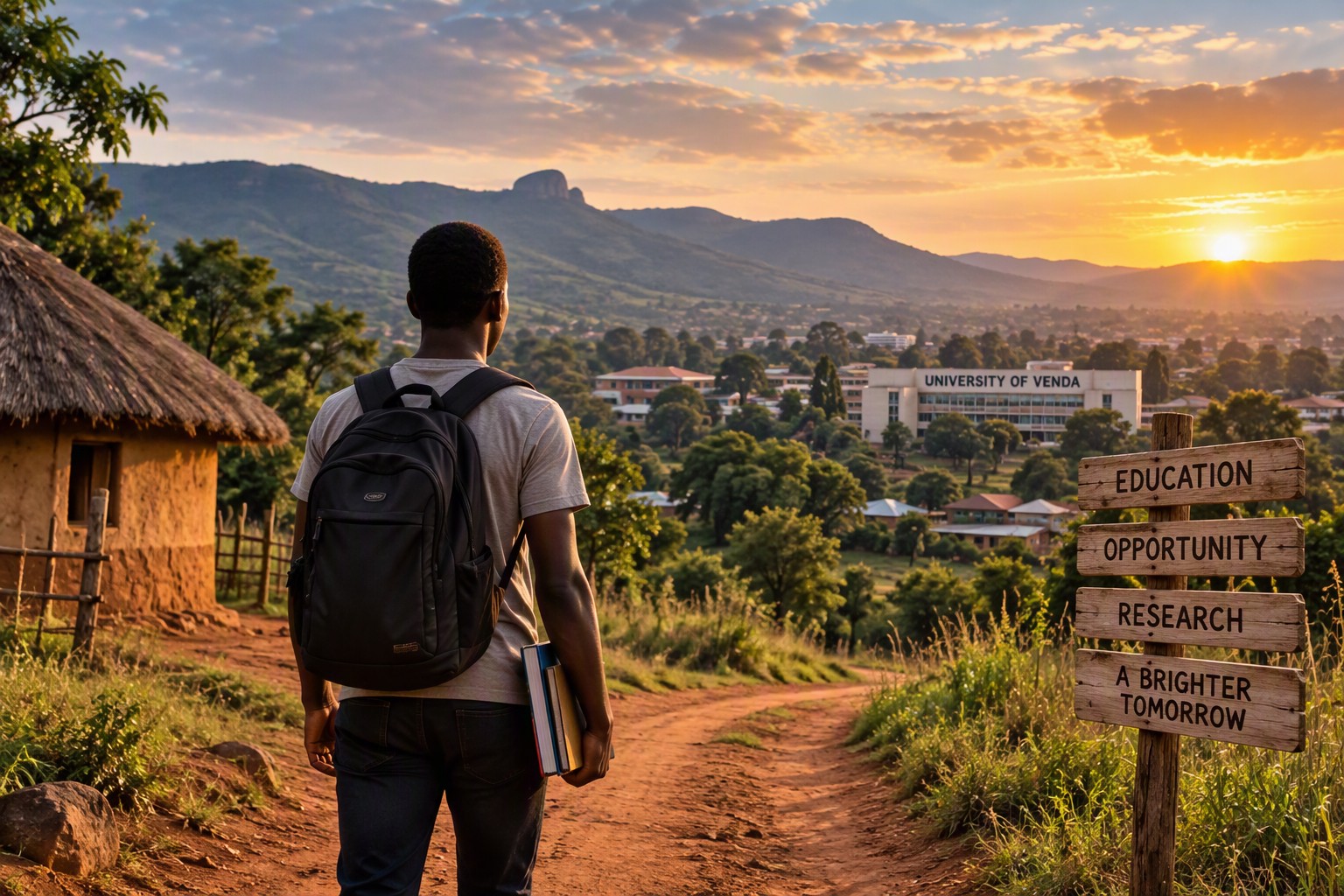
After matriculating from a village secondary school with merit, including a distinction in Biology and TshiVenda, and a B+ in Geography, I embarked on an academic journey that began with enrolling at a local university, the University of Venda, for a degree in Environmental Sciences.
Coming from a humble financial background, I knew that entering the workforce immediately after completing my undergraduate degree would be a challenge. Entering the job market requires financial resources that are easy to overlook: travelling to interviews, relocating after an appointment, securing accommodation, and surviving financially until the first salary arrives.
Coming from a village made this challenge even greater. There were few, if any, opportunities for graduates within the immediate surroundings. Finding employment meant being prepared to relocate to towns, cities, or even other provinces where opportunities were available.
The financial burden associated with taking up a first job, which often comes in the form of an internship or an entry-level position, can be substantial. Relocation requires money for the first month’s rent, a deposit, basic furniture, groceries, transport, and other necessities. I knew that my family’s financial circumstances did not afford me the luxury of entering the job market without these resources.
Before completing my undergraduate degree, I therefore made a decision: instead of immediately entering the job market, I would continue with postgraduate studies.
As luck would have it, the rural landscape still had a great deal to teach me.
Or was it luck?
Was it fate, circumstance, or the influence of forces beyond what humans can readily explain? In the absence of scientific evidence to prove or disprove such possibilities, we can only speculate. Whatever the reason, the decision to continue studying would profoundly influence the direction of my academic journey.
After enrolling for an Honours degree in Environmental Sciences, specialising in Geography, at the University of Venda, I quickly discovered that I had a keen interest in Geographic Information Systems (GIS), Remote Sensing, research, scientific enquiry and academic writing.
It was during this period that I was formally introduced to research methods, geographical thought and research methodologies. One lesson in particular stayed with me: a research problem does not always have to be found somewhere far away. Sometimes, you simply have to look carefully at what is happening around you.
I learned that a researcher could observe their immediate environment, identify environmental or socio-economic challenges, and investigate those challenges from a geographical perspective. Research questions could emerge from the landscape itself, from the experiences of communities, and from patterns that were visible in everyday life.
I also learned another route to identifying research problems: engaging with existing academic literature. By reading previous studies, examining their recommendations and identifying gaps in existing knowledge, a researcher could find questions that had not yet been adequately answered.
Throughout my academic journey, I would eventually employ both approaches.
I would look at the literature.
But I would also look outside.
And, once again, the village would give me something to investigate.
Leave a Reply