
Continuation from Post 9.
My mother’s efforts to support my studies eventually took her to Gauteng, where she worked briefly as a domestic worker.
While there, she became seriously ill.
She told me that she was sick and wanted to come home, but she did not have money for transport.
I told her that I would send her the money I had for transport to university. At the time, I was travelling from the village to university to attend classes and back home every day. That money was what allowed me to get to class.
I told her I would send it to her and somehow I can make another plan.
She refused.
She told me that she had a job lined up for the weekend and that she would use the money from that job to come home.
After that weekend, she became unreachable.
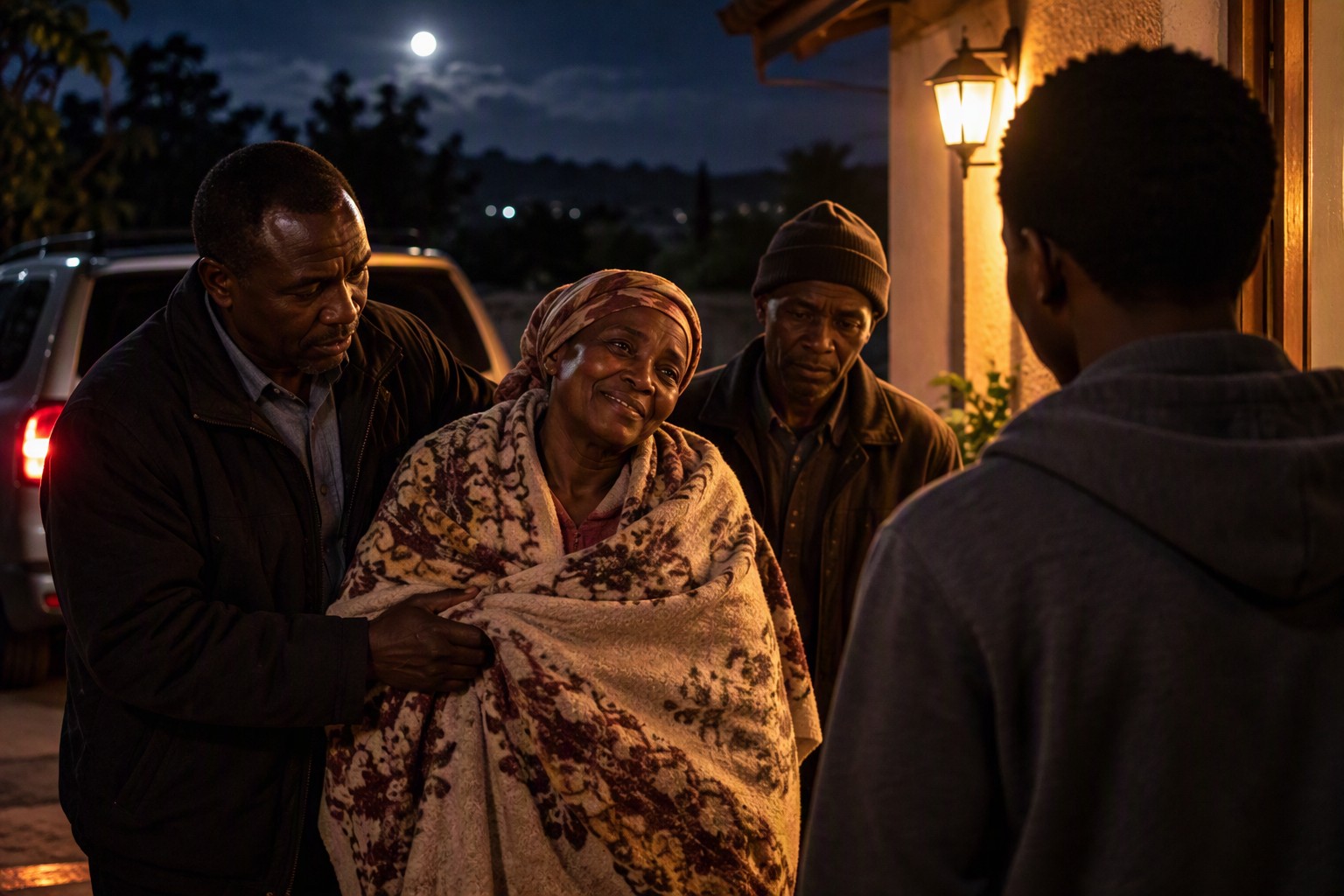
Then, one night, in the dark hours of the early morning, I heard the sound of a car parking in the driveway behind the house.
I could hear faint voices approaching the house. As they came closer, I could make out three people speaking. Two of the voices were familiar. One belonged to my eldest uncle, who lived next door. The other was my mother’s. The third belonged to a distant relative from Gauteng who had brought my mother home.
I woke up and went outside.
Before stepping out of the house, I switched on the outside light.
Three figures emerged from the darkness.
And then I saw my mother.
She smiled.
It was the same smile she used to give me even when she was teasing me or making fun of me.
But this time, the words that accompanied the smile were not funny.
She said:
“Zwidofhela nwananga, ndi khou fa, nwananga.”
Loosely translated into English:
“Zwidofhela, my son, I am dying, my son.”
Exactly a month later, she passed away.
But before she passed on, I had an opportunity to ask her something that had been troubling me.
Why had she refused my help when I offered to send her the money I depended on to travel to university every day?
She told me that she had lied.
There had been no job lined up for that weekend.
Her condition was already serious.
She simply did not want me to give up the money I needed to attend classes. She did not want to take the risk that I might struggle to get to the university to attend class.
She wanted me to stay at university.
She wanted me to complete my studies.
I have thought about that decision many times since.
I cannot say what would have happened had she accepted the money and returned home earlier. I cannot know whether anything would have been different.
But I know why she refused it.
Even while seriously ill, she was thinking about my education.
This was the same person who had been there when my school fees went unpaid. At the time, I could easily have asked why she had not done something about it.
Now, circumstances were different, and she was willing to make sacrifices that I still struggle to comprehend.
That contradiction forced me to reconsider many things I thought I understood about the human condition.
How could someone appear unable to help at one point, and later be prepared to sacrifice so much?
I still do not have a complete answer.
Maybe there are forms of human sacrifice that cannot be neatly explained.
They can only be witnessed.
Join the conversation
What does sacrifice mean when someone gives not because they have plenty, but from the very little they have?


Leave a Reply