A PhD is often described in terms of research, a thesis, and eventually a qualification.
My experience became much broader than that.
One of the benefits I had not fully anticipated was the people I would meet.
I studied alongside students from different parts of Africa, including Zimbabwe, Zambia, Tanzania, Malawi and Eswatini, as well as students from within South Africa.
We came from different countries and different backgrounds, but postgraduate studies brought us together.
Over time, we formed something resembling a brotherhood and sisterhood.
Some of those relationships extended beyond the university and beyond our research.
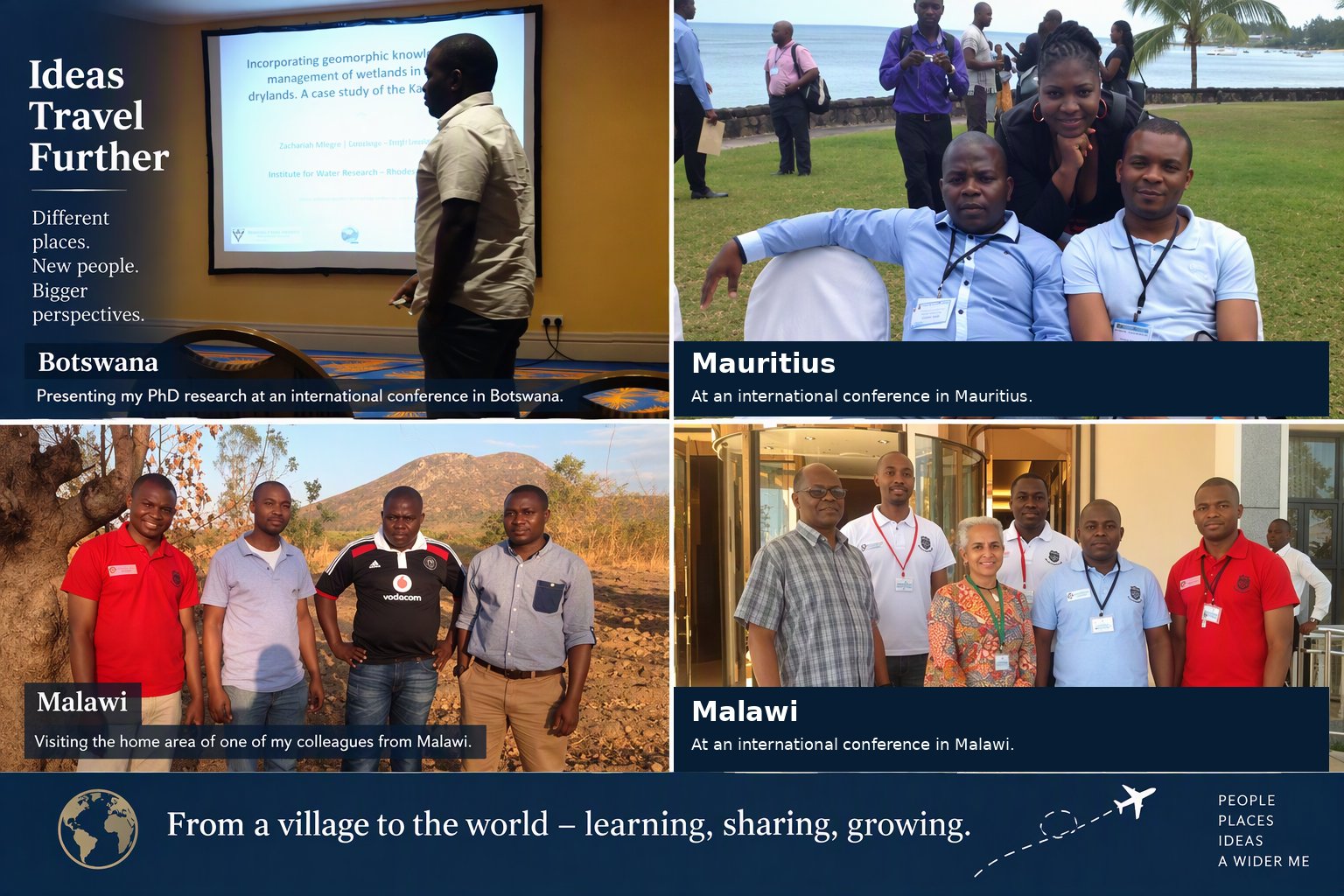
During my trip to Malawi, I had an opportunity to visit the home area of one of my colleagues who was from Malawi.
There was something meaningful about that experience.
At university, we knew one another as postgraduate students. We shared academic spaces, discussed research and travelled to conferences. But visiting the place my colleague came from introduced another dimension to that relationship.
It reminded me that behind each student and researcher was another story, another home and another journey that had eventually brought us into the same academic space.
Perhaps that was another form of education.
The PhD was not only exposing me to different ideas. Through the people I met, it was also exposing me to different places and different experiences.
Some of those relationships did not end when our studies ended. We remained in contact, and with some colleagues I later worked on academic publications.
Looking back, the PhD was therefore producing more than a thesis.
It was also building friendships and professional networks.
My First Passport
There was another experience that postgraduate studies introduced into my life.
International travel.
I obtained my first passport while doing my PhD.
That passport eventually took me to Malawi, Botswana and Mauritius to attend international conferences and present the progress of my research.
For someone whose journey had begun in a village, this was another expansion of my world.
The significance was not simply that I was crossing national borders.
I was meeting researchers from other places, listening to different ideas, presenting my own work, and discovering that research could take me into spaces I had never imagined entering when my educational journey began.
But the conferences were not valuable simply because I had an opportunity to travel to other countries.
They were part of my education.
Learning to Welcome Criticism
At conferences, I had to stand in front of other researchers, present my work, and then listen to what they had to say about it.
That meant learning to appreciate questions and constructive criticism.
A question could identify something I had not considered.
A comment could expose a weakness in the work.
A different interpretation could force me to rethink part of my argument.
When useful comments were accepted and properly implemented, the quality of my research improved.
So, strangely, after presenting my work, I wanted questions.
A discussion session without questions or comments could dampen the mood. Questions meant that people had engaged with the work enough to interrogate it.
That does not mean that every criticism must simply be accepted.
Research also requires judgement.
Some arguments need to be defended.
Others need to be reconsidered.
Sometimes another person sees something that the researcher, after spending months immersed in the work, can no longer easily see.
I began to appreciate constructive criticism not as an attack on the work, but as part of the process through which the work could become better.
Perhaps that lesson extends beyond academic research.
We present what we know.
Someone challenges it.
We reconsider it.
We improve what needs improving and defend what remains sound.
Then we continue.
More Than a Qualification
Looking back, perhaps this is one reason I cannot reduce my PhD experience to the qualification I eventually received.
The thesis mattered.
The research mattered.
But so did the people.
So did obtaining my first passport and travelling beyond South Africa.
So did standing in front of researchers in another country and having my ideas questioned.
And so did visiting the home area of a colleague in Malawi and seeing something of the world from which another person’s journey had begun.
These experiences were connected.
The PhD was teaching me about my research topic, but the academic journey was also teaching me how knowledge itself develops and how relationships can expand the world through which that knowledge travels.
Perhaps education does more than increase what we know.
Sometimes it also enlarges the world in which we are able to think.
Join the conversation
Have you ever received criticism that was uncomfortable at first but eventually helped you improve your work or thinking?
Leave a Reply